
Table of Contents
1 2 Carb Spacer – What It Is and Why It Matters
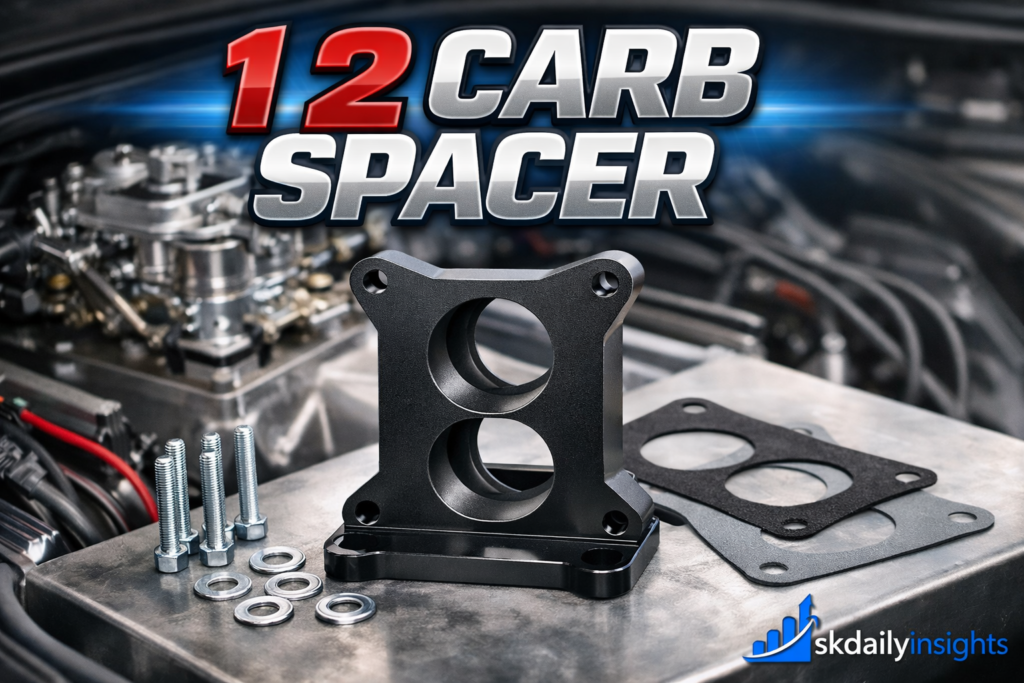
A 1 2 carb spacer is a simple yet powerful component that sits between your engine’s carburetor and intake manifold. At first glance, it may look like a small piece of metal or phenolic material, but its role is far more important than size suggests. This spacer works by creating extra space for air and fuel to mix more efficiently before entering the engine, which can result in smoother throttle response, better torque, and even modest horsepower gains. One of the biggest advantages of using a 1 2 carb spacer is its ability to reduce heat transfer from the engine to the carburetor, preventing heat soak and vapor lock—common issues that reduce engine efficiency and can cause drivability problems. Many performance enthusiasts and street car drivers alike appreciate how a properly chosen carb spacer can enhance airflow, improve fuel atomization, and make the engine feel more responsive without major engine modifications. Essentially, it’s an inexpensive upgrade that delivers real, measurable benefits while being easy to install, making it a smart choice for anyone looking to optimize their engine’s performance.
What Is a Carb Spacer (Including 1 2 Carb Spacer Explained)
A carburetor spacer, such as the 1 2 carb spacer, is a component designed to fit between the carburetor and the intake manifold of an engine, and while it may seem like a small and simple part, it plays a significant role in improving engine performance. The spacer essentially increases the distance between the carburetor and the intake manifold, which allows the air-fuel mixture more room to expand and swirl before entering the combustion chamber. This enhanced airflow and mixture atomization lead to smoother engine operation, more efficient combustion, and can improve throttle response across various RPM ranges. Unlike major engine modifications, a carb spacer is a relatively inexpensive upgrade that provides noticeable results. Depending on the material and thickness, the spacer can also serve as a heat insulator, protecting the carburetor from the intense heat of the intake manifold, which is particularly useful in preventing issues like vapor lock or fuel boiling that can disrupt engine performance. Many performance and street vehicles use 1 2 carb spacers as a way to get a balanced improvement in power and drivability without drastically altering the engine’s setup.
Understanding the 1 2 carb spacer also involves recognizing the variations in size, material, and design. Carb spacers come in multiple thicknesses—commonly 1/2 inch, 1 inch, and 2 inches—each offering different benefits in terms of torque, horsepower, and throttle response. The 1 2 carb spacer is often chosen because it strikes a balance between providing enough space for improved airflow while still being compact enough to fit under standard engine compartments without creating clearance issues. Materials used in carb spacers include aluminum, which is strong and durable but conducts heat more readily, and phenolic materials, which are excellent insulators that reduce heat transfer to the carburetor. Some modern designs even combine these materials to maximize both structural integrity and thermal insulation. By choosing the right 1 2 carb spacer for a specific engine type, drivers can optimize air-fuel mixture distribution, reduce heat-related issues, and enjoy smoother and more responsive engine performance, making it a valuable upgrade for enthusiasts and everyday drivers alike.
How a 1 2 Carb Spacer Works – Technical Breakdown
A 1 2 carb spacer works by creating additional space between the carburetor and the intake manifold, which allows the air and fuel mixture to flow more freely and evenly before entering the engine’s combustion chambers. This increased distance gives the mixture more time to swirl and atomize, which improves combustion efficiency and helps the engine produce smoother power across different RPM ranges. The spacer also serves as a heat barrier, especially when made from phenolic or hybrid materials, reducing the amount of heat transferred from the intake manifold to the carburetor. This reduction in heat prevents the fuel from vaporizing too early, avoiding issues like vapor lock that can cause engine hesitation or stalling. By improving airflow and reducing heat, a 1 2 carb spacer enhances throttle response, allowing the engine to feel more lively and responsive, especially during acceleration or under load. Even small changes in the air-fuel mixture and temperature can have noticeable effects on drivability and engine performance, making the spacer an important yet often overlooked modification.
The effectiveness of a 1 2 carb spacer also depends on its design, including thickness, material, and the number of holes or ports it contains. Open spacers allow maximum airflow and are often used in high-performance applications, while four-hole spacers are designed to increase air velocity, enhancing low and mid-range torque for street-driven vehicles. Aluminum spacers are durable and provide structural support, but they conduct heat more easily, while phenolic spacers act as an insulator, keeping the carburetor cooler for better fuel atomization. Some spacers combine aluminum and phenolic to balance strength and thermal protection, giving the engine both stability and performance benefits. By carefully selecting a 1 2 carb spacer that matches the engine’s size, camshaft profile, and carburetor type, drivers can optimize their engine’s power output, maintain smoother throttle response, and improve overall efficiency without major engine modifications. This simple component, when used correctly, can transform the driving experience by making the engine more predictable, powerful, and fuel-efficient.
Benefits of Using a 1 2 Carb Spacer
Using a 1 2 carb spacer provides a range of benefits that go beyond just minor performance improvements, making it a popular choice for both casual street drivers and performance enthusiasts. One of the primary advantages is the enhancement of engine efficiency through improved airflow and fuel atomization. By allowing the air-fuel mixture to swirl more effectively before entering the combustion chamber, the spacer ensures that the engine burns fuel more completely, which can lead to smoother throttle response, better mid-range torque, and modest horsepower gains. Additionally, the spacer acts as a thermal barrier, preventing excessive heat from reaching the carburetor, which reduces the risk of vapor lock and helps maintain consistent engine performance even under heavy load or hot weather conditions. For many drivers, this translates into a more reliable and enjoyable driving experience, as the engine feels more responsive and predictable, and fuel delivery becomes more stable across different driving conditions. The 1 2 carb spacer is a relatively low-cost modification that offers a high return on performance and drivability, making it an accessible upgrade for almost any carbureted engine setup.
Beyond performance improvements, a 1 2 carb spacer also offers practical benefits that enhance overall engine longevity and maintenance ease. By reducing the heat transferred to the carburetor, it helps protect sensitive components like gaskets and seals from premature wear caused by excessive temperatures. This thermal insulation also minimizes the chances of fuel boiling within the carburetor, which can otherwise lead to rough idling, hesitation, or stalling. Furthermore, the installation of a carb spacer is generally straightforward and does not require major engine modifications, allowing drivers to enjoy tangible benefits with minimal downtime and cost. The versatility of the 1 2 carb spacer also allows it to complement other engine upgrades, such as performance intake manifolds or upgraded carburetors, further enhancing engine power and efficiency. Overall, this small but impactful component not only improves engine performance and drivability but also contributes to better heat management, longer-lasting carburetor components, and a more enjoyable driving experience, making it an essential consideration for anyone looking to optimize a carbureted engine.
Types of Carb Spacers (Including 1 2 Carb Spacer Variations)
Carb spacers, including the 1 2 carb spacer, come in several types and materials, each designed to offer different performance characteristics depending on the engine setup and driving goals. The main distinction is between open spacers and four-hole or divided spacers. Open spacers allow unrestricted airflow and are often used in high-performance engines where maximum air and fuel delivery is critical for horsepower gains at high RPMs. In contrast, four-hole spacers are designed to increase air velocity by directing the airflow through smaller passages, which improves low and mid-range torque and enhances throttle response for everyday driving. The thickness of the spacer also matters; a 1 2 carb spacer is commonly chosen because it provides a balance between additional plenum volume for better air-fuel mixture expansion and maintaining clearance under the hood, making it compatible with most street and performance engines. Choosing the right spacer type ensures that the engine receives the optimal airflow pattern, which can directly affect power delivery, efficiency, and drivability without the need for extensive modifications.
In addition to type and thickness, carb spacers vary in the materials used, which directly influences their performance and heat management properties. Aluminum spacers are strong and durable, offering structural stability, but they conduct heat more readily, which may slightly increase carburetor temperature if not paired with thermal management solutions. Phenolic spacers, on the other hand, act as excellent thermal insulators, reducing heat transfer from the intake manifold to the carburetor and keeping the fuel cooler, which improves combustion efficiency and reduces vapor lock risk. Some modern designs combine aluminum and phenolic materials, providing the strength of metal while retaining the thermal insulation benefits of phenolic cores. A 1 2 carb spacer made from hybrid materials can therefore offer the best of both worlds: durability, heat reduction, and optimized airflow. Understanding these variations allows drivers to select a spacer that matches their engine’s needs, whether the priority is street drivability, performance racing, or a balance of both, making the 1 2 carb spacer a versatile and effective upgrade for virtually any carbureted engine.
Choosing the Right 1 2 Carb Spacer for Your Engine
Choosing the right 1 2 carb spacer for your engine involves more than simply picking a spacer off the shelf; it requires understanding your engine’s setup, driving style, and performance goals. The thickness of the spacer, in this case 1/2 inch, is often ideal for balancing airflow improvements and thermal insulation without creating clearance issues under the hood. Engine type, whether it’s a street-driven vehicle or a high-performance build, plays a significant role in spacer selection. For street cars, a 1/2-inch spacer can enhance low and mid-range torque, making daily driving smoother and more responsive. For performance or racing applications, it may improve high-RPM airflow and slightly increase horsepower when paired with the right carburetor and intake manifold. Additionally, the design of the intake manifold—single-plane versus dual-plane—affects how a spacer influences airflow and combustion. Single-plane manifolds generally benefit more from thicker spacers that promote high-RPM power, while dual-plane manifolds work best with thinner spacers that maintain velocity and torque at lower RPMs. Considering these factors ensures that the 1 2 carb spacer you choose complements your engine’s characteristics rather than creating airflow mismatches that could hurt performance.
Another important aspect of selecting the right 1 2 carb spacer is matching it to the specific carburetor and manifold bolt pattern. Many spacers are designed to fit popular carburetors like Holley, Edelbrock, and Spread Bore models, but verifying compatibility is essential to avoid installation issues or leaks. Material selection also plays a critical role in performance outcomes. Aluminum spacers provide rigidity and durability, which is ideal for high-performance applications that experience intense engine vibrations, but they conduct heat more easily. Phenolic spacers or hybrid designs offer superior heat insulation, keeping the carburetor cooler and improving fuel atomization, which can enhance both performance and drivability. By carefully evaluating engine size, camshaft profile, carburetor type, and intended use, a 1 2 carb spacer can be chosen to maximize power, improve throttle response, reduce heat-related problems, and ensure long-term reliability. Making an informed choice ensures that this small but powerful component delivers real improvements, making the engine feel more efficient, responsive, and enjoyable to drive.
Step‑by‑Step Installation Guide for a 1 2 Carb Spacer
Installing a 1 2 carb spacer may seem intimidating at first, but with some basic tools and careful preparation, it can be a straightforward process that provides noticeable improvements in engine performance and drivability. The first step is to safely remove the carburetor from the intake manifold, taking care to label or photograph linkage connections, fuel lines, and vacuum hoses to ensure proper reassembly. Once the carburetor is removed, the old gasket should be inspected or replaced to ensure a proper seal, as this is critical for preventing air leaks that can negatively affect engine performance. The 1 2 carb spacer is then positioned on the intake manifold, followed by the installation of a new gasket between the spacer and the carburetor. Proper alignment is essential to ensure that bolt holes and airflow passages match precisely, and once everything is aligned, the carburetor is carefully bolted back on using the manufacturer’s recommended torque specifications to avoid warping or damaging the spacer. This installation process not only provides better airflow and improved fuel atomization but also positions the carburetor at the optimal distance from the intake manifold, enhancing throttle response and reducing heat transfer that can lead to vapor lock and fuel boiling.
After installation, adjustments may be necessary to ensure the engine runs smoothly with the new 1 2 carb spacer in place. The throttle linkage and fuel lines should be checked for proper fit and movement, making sure nothing is binding or restricted. In some cases, minor carburetor tuning may be required, including adjusting jetting or idle settings to account for changes in airflow and mixture caused by the spacer. It is also recommended to monitor the engine during the first few drives to detect any irregularities in performance, such as hesitation, rough idle, or overheating, and make fine adjustments as needed. Properly installed, a 1 2 carb spacer can improve overall engine efficiency, increase low and mid-range torque, and provide a smoother, more responsive driving experience without the need for extensive engine modifications. This simple upgrade is an excellent way to gain noticeable performance benefits while maintaining the reliability and longevity of the engine, demonstrating how a small component can make a significant difference in the performance and drivability of any carbureted vehicle.
Common Questions About 1 2 Carb Spacer
Many drivers and car enthusiasts have questions about the 1 2 carb spacer, often wondering how much impact such a small component can have on engine performance and whether it is worth the investment. One of the most common questions is whether a carb spacer can increase horsepower. While a 1 2 carb spacer may not provide dramatic gains like a complete engine rebuild or high-performance camshaft, it does improve airflow and fuel atomization, which can result in modest horsepower increases, typically in the range of 5 to 15 horsepower depending on the engine setup. More importantly, it enhances low and mid-range torque, which improves drivability and makes the engine feel more responsive in everyday driving conditions. Another frequent concern is whether installation is difficult, and while some drivers may worry about removing and reinstalling the carburetor, the process is generally straightforward if the proper steps are followed, including labeling all fuel lines, vacuum connections, and linkages. Using the correct gaskets, ensuring proper alignment, and following torque specifications are key to a successful installation, allowing drivers to reap the benefits of smoother throttle response and improved engine efficiency without professional help.
Another area of curiosity involves choosing the right size and material of the 1 2 carb spacer for specific engines. Drivers often ask if the thickness or type of material really matters. The answer is yes, as thickness affects airflow characteristics and torque delivery, while material determines heat insulation properties. A 1/2-inch spacer strikes a balance for most street and performance engines, providing enough plenum space to improve air-fuel mixing while fitting under standard hood clearance. Aluminum spacers offer durability and strength, which is useful in high-vibration applications, while phenolic or hybrid spacers reduce heat transfer to the carburetor, enhancing fuel atomization and preventing issues like vapor lock. Understanding these differences helps drivers select the right 1 2 carb spacer for their engine’s specific needs, whether the goal is smoother daily driving, improved mid-range power, or enhanced overall efficiency. By addressing these common questions, it becomes clear that a 1 2 carb spacer is a simple, cost-effective, and versatile upgrade that can make a noticeable difference in the performance, reliability, and feel of a carbureted engine.
Troubleshooting & Mistakes to Avoid
While a 1 2 carb spacer can provide significant benefits for engine performance and drivability, it’s important to be aware of potential issues and mistakes that can occur during installation or use. One common problem is an incorrect air-fuel mixture after installing the spacer, which can lead to a lean or rich condition that affects engine performance and fuel efficiency. Because the spacer changes airflow dynamics and mixture atomization, minor adjustments to carburetor jetting or idle settings may be necessary to optimize performance. Another issue is selecting a spacer that is too thick or incompatible with the engine’s intake manifold and carburetor. A spacer that is too large can disrupt airflow, cause clearance problems, or even make the throttle linkage difficult to operate. Heat soak is another consideration; using an aluminum-only spacer without adequate insulation can transfer excess heat to the carburetor, reducing fuel density and increasing the likelihood of vapor lock. Understanding these risks and taking preventative steps, such as choosing the right spacer type and material and checking alignment during installation, helps ensure that the 1 2 carb spacer delivers its intended benefits without unintended drawbacks.
In addition to installation considerations, ongoing maintenance and monitoring are key to avoiding problems with a 1 2 carb spacer. After installation, it’s essential to check for air leaks around the gaskets, as even a small leak can reduce performance and create unstable idle conditions. Monitoring engine temperature, throttle response, and fuel consumption during the first few drives allows drivers to detect any irregularities that may require fine-tuning. It’s also important to periodically inspect the spacer and surrounding components for wear or damage, especially in high-vibration or high-performance engines. Avoiding common mistakes such as over-tightening bolts, ignoring gasket condition, or selecting the wrong material can prevent many issues before they arise. By following careful installation practices, performing regular checks, and making necessary adjustments, a 1 2 carb spacer can provide consistent performance improvements, smoother drivability, and longer-lasting engine components, demonstrating that even a small, relatively inexpensive part can have a major impact on a carbureted engine’s efficiency and reliability.
Final Thoughts – Is a 1 2 Carb Spacer Worth It
A 1 2 carb spacer is one of those simple, cost-effective modifications that can have a surprisingly noticeable impact on a carbureted engine’s performance, drivability, and efficiency. While it may not transform an engine into a high-horsepower race machine on its own, it improves airflow, enhances fuel atomization, and reduces heat transfer to the carburetor, which together result in smoother throttle response, better low and mid-range torque, and more reliable engine operation. Many drivers find that the benefits of installing a 1 2 carb spacer are especially evident during everyday driving, where improved responsiveness and stability make acceleration feel more controlled and the engine more predictable. In addition, it provides a low-risk upgrade that is easy to install, relatively inexpensive, and compatible with a wide range of carburetors and intake manifolds, making it accessible to both casual enthusiasts and serious performance builders. The combination of improved airflow, thermal management, and drivability means that even a small 1/2-inch spacer can have an outsized effect on how the engine performs and feels on the road.
Ultimately, whether a 1 2 carb spacer is worth it depends on the driver’s goals and the type of engine setup being used, but for most applications, it offers a clear return in performance and reliability. By carefully choosing the right material, thickness, and design, and by installing it correctly with proper gaskets and alignment, drivers can experience the benefits without worrying about negative side effects like heat soak, fuel mixture issues, or throttle interference. The 1 2 carb spacer is not just a minor add-on; it is a practical and versatile component that enhances the efficiency of fuel combustion, helps maintain optimal engine temperatures, and provides a smoother, more responsive driving experience. For anyone looking to maximize their carbureted engine’s potential in a cost-effective and low-risk way, this small upgrade is highly recommended, demonstrating that even modest modifications can make a meaningful difference in engine performance, reliability, and overall enjoyment of driving.